“The King is Pleas’d to Sit with Us, at His Table”: Particular Baptists and the Lord’s Supper, 1640s–1740s

Michael A. G. Azad Haykin | Apr 6, 2026 | Featured, Research Treasury
The Lord’s Supper at the Outset of the Modern Era
In the fall of 1529, two German-speaking contingents of Reformers—some from Wittenberg in Saxony, led by Martin Luther (1483‒1546) and some from Zurich in Switzerland under the leadership of Huldrych Zwingli (1483‒1531)—met and clashed at an important colloquy in Hesse. Their differences on the nature of Christ’s presence in the Lord’s Supper were threatening to create an irreparable breach in the ranks of the Reformation. Both of the German Reformers rejected vehemently the Roman dogma of transubstantiation, which had received conciliar expression at the Fourth Lateran Council (1215) in the declaration of Canon 1: Christ’s “body and blood are truly contained in the sacrament of the altar under the forms of bread and wine, the bread and wine having been changed in substance (transsubstantiatis), by God’s power, into his body and blood.”1 Luther spoke for both himself and Zwingli when he described this doctrine as “an absurd and unheard-of juggling” of words.2 Nevertheless, Luther, ever the conservative, argued that while the bread and wine were not substantially changed, they did, after the prayer of consecration, contain the very body and blood of Christ. Zwingli, on the other hand, was convinced that since the humanity of Christ, by definition, could not be omnipresent, Luther’s view was erroneous. While Zwingli highlighted the memorial aspect of the Table, he was not averse to affirming that the bread and the wine are “the means by which an almost mystical union with Christ is achieved” through the Spirit of Christ.3
The Protestant ruler of Hesse, Philip I (1504‒1567), hoped that a theological rapprochement between Luther and Zwingli could be achieved by having them meet at his castle in Marburg in the autumn of 1529. Zwingli and Luther met face to face for the first time on the second day of the colloquy that Philp arranged, October 2. It was an explosive meeting that failed to unite the two Christian leaders. Luther insisted that “this is my body” (Luke 22:19) means simply that: the word “is” needs to be taken literally—the bread is the body of Christ. Zwingli, convinced that the risen body of Christ had ascended to heaven and could not be literally present in every locale where the Lord’s Supper was being celebrated, insisted as vehemently from the very same text in Luke (“do this in remembrance of me”) that the elements must therefore be symbols that were designed to prompt remembrance. Subsequently, Luther refused to recognize the Swiss Reformer as a genuine Christian and thus their division remained unhealed.4
Five years later, when some French Evangelicals in the autumn of 1534 decided to broadcast their opposition to Roman Catholic theology through strategically-laced placards in Paris and other major provincial cities, it was the mass—not the Papacy nor the authority of tradition—that was chosen for these public vehicles of criticism. Entitled Articles veritables sur les horribles, grandz et importables abuz de la Messe papalle: inventée directement contre la saincte Cene de Jesus Christ (True Articles on the Horrible, Great, and Insupportable Abuses of the Papal Mass: Devised Directly Against the Holy Supper of Jesus Christ), these billboards identified what the Evangelicals regarded as central to their quarrel with Rome.5 The response of the French government to what it regarded as unspeakable blasphemy was to unleash a vicious wave of persecution in which a number of Evangelicals were immolated and some, including John Calvin (1509‒1564), forced to flee for their lives.
These two vignettes reveal the passions that were aroused by a rite that was supposed to display the unity of God’s people, but during this opening era of the modern world, turned out to be central in not only dividing Catholic from Protestant but also Protestants from one another. In an attempt to overcome at least the latter division, Calvin offered a mediating position between Luther and Zwingli, between the Lutheran and the Reformed wings of the magisterial Reformation.6 In Calvin’s perspective on the nature of the Lord’s Supper, the bread and wine are signs and guarantees of a present reality. To the one who eats the bread and drinks the wine with faith there is conveyed what they symbolize, namely Christ. The channel, as it were, through which Christ is conveyed to the believer is none other than the Holy Spirit. The Spirit acts as a kind of link or bridge between believers and the ascended Christ. Christ is received by believers in the Supper, “not because Christ inheres the elements, but because the Holy Spirit binds believers” to him. But without faith, only the bare elements are received.7 Calvin’s position was rejected by the Lutherans, but it turned out to be an enormously influential one among the Anglophone heirs of the Reformation: it was followed by the English and American Puritans and such eighteenth-century Evangelicals as Jonathan Edwards (1703‒1758) and Charles Wesley (1707‒1788).8 And it was the position of the Particular (Calvinistic) Baptists throughout the seventeenth and much of the eighteenth centuries.
A Seventeenth-Century Confession about the Lord’s Supper
The Particular Baptists had emerged from the matrix of Puritanism in the 1640s and true to their roots, they held to Calvin’s articulation of the presence of Christ at his Table. The Second London Confession of Faith especially provides an excellent vantage-point to view Particular Baptist thought in this regard. This text has been described as “the most influential and important of all Baptist Confessions.”9 It was first published in 1677 by the co-pastors of Petty France Particular Baptist Church in London, William Collins (d. 1702) and Nehemiah Coxe (d.1689). When the second edition of this Confession (1688) was ratified in the autumn of 1689 by the representatives of a hundred or so Particular Baptist churches, Collins signed for the Petty France congregation. Incorporating large portions of the Presbyterian Westminster Confession of Faith (1646) and the Congregationalist Savoy Declaration (1658), the Second London Confession was clearly drawn up by Collins and Coxe so as to indicate that there were extensive areas of doctrinal agreement between the Particular Baptists and these other Calvinistic bodies. The chapter in the Confession that deals with the Lord’s Supper, chapter 30, is an especially good example of the way in which the Particular Baptists sought to demonstrate their fundamental solidarity with other communities in the Reformed tradition. Following the Westminster Confession and the Savoy Declaration, the Baptist Confession denounces as unbiblical the Roman Church’s doctrine of the mass, its practice of private masses, its refusal to allow any but a priest to partake of the cup, and its dogma of transubstantiation.10 The fact that such a large portion of this chapter is devoted to denouncing errors regarding the Lord’s Supper must be seen as indicative of the fact that the Table was just as central for these men as for their Reformation forbears during the previous century.
Having noted such errors regarding the Lord’s Table, a right understanding of this ordinance is then inculcated. “Worthy receivers, outwardly partaking of the visible Elements in this Ordinance, do then also inwardly by faith, really and indeed, yet not carnally, and corporally, but spiritually receive, and feed upon Christ crucified & all the benefits of his death: the Body and Blood of Christ, being then not corporally, or carnally, but spiritually present to the faith of Believers, in that Ordinance, as the Elements themselves are to their outward senses.”11 Close comparison of this statement with the parallel statements in the Westminster Confession and the Savoy Declaration reveals one main area of difference. The two earlier confessions use the term “sacrament” to describe the Lord’s Supper, whereas in the Second London Confession this has been altered to “ordinance.”12 Neither term is actually used in the New Testament, but the term “ordinance” appears to have been adopted to stress the divine institution of the Lord’s Supper.13 This difference between the three confessions, however, is minimal compared to what they have in common. All three affirm that as believers partake of the bread and the wine, Christ is “spiritually present” to them and nourishing them. In other words, all three documents essentially hold to John Calvin’s viewpoint about Christ’s presence at the celebration of the Lord’s Supper.14
If we turn to the first paragraph of chapter 30 of this Confession we find a detailed discussion of the importance of the Lord’s Supper for the Christian life. In fine, it is a key means by which the Lord enables his people to persevere in their Christian pilgrimage. It is stated that the
Supper of the Lord Jesus, was instituted by him, the same night wherein he was betrayed, to be observed in his Churches unto the end of the world, for the perpetual remembrance, and shewing forth the sacrifice in his death, confirmation of the faith of believers in all the benefits therof, their spiritual nourishment, and growth in him; and to be a bond and pledge of their communion with him, and with each other.15
In this enumeration of the reasons for the Lord’s Table, the Second London Confession follows closely both the Westminster Confession and the Savoy Declaration. Christ instituted the Lord’s Supper for five reasons according to this paragraph.
- The Supper serves as a vivid reminder of and witness to the sacrificial death of Christ.
- Then, participation in the Lord’s Supper enables believers to more firmly grasp all that Christ has done for them through his death on the cross.
- In this way the Lord’s Supper is a means of spiritual nourishment and growth.
- Fourth, the Lord’s Supper serves as a time when believers can re-commit themselves to Christ.
- Finally, the Lord’s Supper affirms the indissoluble union that exists, on the one hand, between Christ and believers, and, on the other, between individual believers.
A careful reading of this paragraph on the Lord’s Supper and that discussed above, the seventh paragraph, compels the reader to recognize that those who drew up this Confession and then those who later affirmed it in 1689 were thoroughly convinced that regular participation at the Lord’s Table was an utter necessity for the Christian life.
The Hymnic Witness of the Eighteenth Century
As we move into the eighteenth century, Particular Baptist hymnody is especially helpful in discerning this ongoing high eucharistic piety. Some of the richest texts that display this piety can be found in Hymns In Commemoration Of the Sufferings Of Our Blessed Saviour Jesus Christ, Compos’d For the Celebration of his Holy Supper by Joseph Stennett I (1663‒1713), the pastor of a Calvinistic Seventh-day Baptist Church that met in Pinners’ Hall, London.16 Echoing the Zwinglian tradition of memorialism, Stennett described the Church’s celebration at the Table as a “perpetual memorial” of Christ’s death, a death that is to be regularly commemorated.17 And the bread and wine he called “proper Symbols” and “Figures.”18 Yet, Stennett could also say of these symbols:
Thy Flesh is Meat indeed,
Thy Blood the richest wine;
How blest are they who often feed
On this Repast of thine!19
And he could urge his fellow believers:
Sing Hallelujah to our King,
Who nobly entertains
His Friends with Bread of Life, and Wine
That flow’d from all his Veins.His Body pierc’d with numerous Wounds,
Did as a Victim bleed;
That we might drink his sacred Blood,
And on his Flesh might feed.20
Stennett did make it clear that the feeding involved at the Table is one of faith,21 but this is realistic language utterly foreign to the Zwinglian perspective.
Two hymns of Alverey Jackson (c.1697/1698‒1763), the pastor for close to forty years of the Baptist cause in Barnoldswick—now in Lancashire, but in Jackson’s day, in the West Riding of Yorkshire—can also be cited as evidence for what is clearly the most prevalent belief about the nature of the Lord’s Supper among eighteenth-century Baptists.22 The Barnoldswick church had the Lord’s Supper on a quarterly basis so that members who lived at a distance would all be able to participate. The celebration of the Supper was preceded by a day of solemn reflection and spiritual preparation: “The preparatory meetings began at 10 o’clock on Saturday morning and were held at intervals throughout the day.” Jackson composed hymns for these Saturday meetings. The final two stanzas of one of them yearned thus for the presence of Christ the following day at his Table:
And at thy table we expect
To morrow to appear,
We pray, in love thou’llt us respect,
Accept, and meet us there.
Our wounded spirits do thou heal,
Thy Oyl and Wine pour in;
Strengthen our souls in peace, & seal
The pardon of our sin.23
In addition to being an occasion for fellowship with Christ, the Supper here is seen to be a vehicle of soul healing (the story of the Good Samaritan clearly lies behind the imagery of the second line of the final stanza), spiritual strengthening, a place where peace is imparted, and assurance of the forgiveness of sin richly given. A second eucharistic hymn by Jackson is also emphatic that at the Table, there is a foretaste of the beatific vision:
Lord we are here, met to prepare
For thy bless’d ordinance,
We pray thou wilt thy word fulfil,
And shew thy countenance.
Our frames are poor, but thou hast store
Of righteousness and Grace,
And we therefore, do thee adore,
And hope to see thy face.24
Jackson certainly did not hold to a Roman Catholic or Lutheran view of the “real presence.” Nevertheless, he did expect the Lord’s Supper to be a place where the joy of salvation was renewed and Christ himself seen in the mind’s eye.
A Definitive Eighteenth-Century Work on the Lord’s Supper
Finally, another Calvinistic perspective on the Supper from this era is found in Thoughts on the Lord’s Supper, Relating to the Nature, Subjects, and right Partaking of this Solemn Ordinance (1748) by Anne Dutton (1692‒1765).25 Female theological writers from her era are a distinct rarity, which makes her literary legacy extremely significant. In fact, her work on the Lord’s Supper can well be considered the definitive eighteenth-century Baptist presentation of the Calvinistic view of the Table.26
In an introductory preface, Dutton noted that she had been delayed in writing the treatise at the request of a female friend that she had received in December of 1747. The delay was caused by an unspecified “great trial” through which she was passing.27 That trial must have been the drowning of her husband Benjamin Dutton in the Atlantic on a return voyage he was making from America, which happened in 1747. From a theological point of view, Dutton also felt herself inadequate to the task, but a number of Scripture texts such as John 21:15 (“Feed my lambs,” KJV) coming to mind, she put pen to paper.28
Dutton devoted the first section of her sixty-page treatise on the Lord’s Supper to outlining its nature. In this section Dutton argued that the Supper is, among other things, a “communication.” “As our Lord is spiritually present in his own ordinance,” she wrote, “so he therein and thereby doth actually communicate, or give himself, his body broken, and his blood shed, with all the benefits of his death, to the worthy receivers.”29 Here Dutton is affirming that Christ is indeed present at the celebration of his supper and makes it a means of grace for those who partake of it with faith. Her biblical proof is found in 1 Corinthians 10:16, which she has rightly interpreted.
In this passage Paul is arguing that Christians should not believe that idol worship is harmless because pagan gods have no real existence in the world. In 1 Corinthians 8:5 Paul had stated that Graeco-Roman culture knew of “many gods and many lords” in heaven and on earth. But the Apostle goes on in the following verse, whatever his Greek and Roman contemporaries might believe, he and his fellow Christians were assured that there was but “one God, the Father” and “one Lord Jesus Christ.” As for the Greek and Roman gods, the Ancient Church recognized that they were, in Paul’s words, “nothing in the world” (1 Corinthians 8:3). Undoubtedly, they “existed” for those who worshipped them, but from the standpoint of reality they simply did not exist. They were, as Paul says in his speech on Mars’ Hill, a classic defence of the Christian perspective on life, “something shaped by art and man’s devising” (Acts 17:29). Yet Paul goes on to argue in 1 Corinthians 10, this did not mean that pagan religion was harmless. In fact, it was “the locus of demonic activity, and … to worship such ‘gods’ is in fact to fellowship with demons” (1 Corinthians 10:19-20).30 And to illustrate his point that idol worship involves the presence of other beings than the worshippers Paul gives the example of Temple worship in the Old Testament and the Lord’s Supper. In the latter case, his argument assumes that worship at the Lord’s Supper involves the presence of the Lord Jesus.
Thus, as Dutton stated later on in this treatise: in the Lord’s Supper “the King is pleas’d to sit with us, at his Table.”31 In fact, so highly did she prize this means of grace that she stated, with what other Particular Baptists of her era might have described as some exaggeration, that the celebration of the Lord’s Supper “admits” believers “into the nearest Approach to his glorious Self, that we can make in an Ordinance-Way on the Earth, on this Side the Presence of his Glory in Heaven.”32 For Anne, and one suspects many of her fellow Baptist Dissenters, the Lord’s Supper was a “Royal Banquet which infinite Love hath prepared.”33 Her language may sound extravagant to some, but it reveals, I believe, something of the spiritual intensity that was available to Baptist congregations in the mid-eighteenth century.
Further reading
In addition to Anne Dutton’s treatise on the Lord’s Table, see also Richard Barcellos, The Lord’s Supper as a Means of Grace: More than a memory (Fearn, Tain, Ross-shire: Christian Focus, 2013) and Michael A. G. Haykin, Amidst Us Our Belovèd Stands: Recovering Sacrament in the Baptist Tradition (Bellingham, WA: Lexham Press, 2022).
- “Fourth Lateran Council: 1215: Canon 1. Confession of Faith” (Papal Encyclicals Online; https://www.papalencyclicals.net/councils/ecum12-2.htm#1; accessed March 27, 2026). For the Latin, see H. J. Schroeder, Disciplinary Decrees of the General Councils: Text, Translation, and Commentary (St. Louis, MO; London: B. Herder Book Co., 1937), 560. For an outline of medieval thinking about the mass, see Gary Macy, “The Medieval Inheritance” in A Companion to the Eucharist in the Reformation, ed. Lee Palmer Wandel, Brill’s Companions to the Christian Tradition, vol. 46 (Leiden: Brill, 2014), 15‒37. ↩︎
- Cited Lee Palmer Wandel, “Martin Luther and the Medieval mass” in Martin Luther and the Shaping of the Catholic Tradition, ed. Nelson M. Minnich and Michael Root (Washington, DC: Catholic University of America Press, 2021), 165. This statement is from Luther’s On the Babylonian Captivity of the Church. ↩︎
- Bruce Gordon, Zwingli: God’s Armed Prophet (New Haven, CT; London: Yales University Press, 2021), 237‒238. For details of Zwingli’s eucharistic theology, see Derek R. Moore-Crispin, “ ‘The Real Absence’: Ulrich Zwingli’s View of the Lord’s Supper” in Union and Communion, 1529-1979 (London: The Westminster Conference, 1979), 22‒34; Carrie Euler, “Huldrych Zwingli and Heinrich Bullinger” in Companion to the Eucharist in the Reformation, ed. Wandel, 57‒74. ↩︎
- See George John Beto, “The Marburg Colloquy of 1529: A Textual Study,” Concordia Theological Monthly 16.2 (February1945): 73‒94; Lee Palmer Wandel, “The Body of Christ at Marburg, 1529” in Image and Imagination of the Religious Self in Late Medieval and Early Modern Europe, ed. Reindert L. Falkenburg, Walter S. Melion, and Todd M. Richardson (Turnhout, Belgium: Brepols, 2007), 195‒213. ↩︎
- Christopher Elwood, The Body Broken: The Calvinist Doctrine of the Eucharist and the Symbolization of Power in Sixteenth-Century France, Oxford Studies in Historical Theology (New York, NY; Oxford: Oxford University Press, 1999), 28‒29. ↩︎
- Cf. William Henry Brackney, The Baptists (New York, NY: Greenwood Press, 1988), 62‒63. ↩︎
- Victor A. Shepherd, The Nature and Function of Faith in the Theology of John Calvin (Macon, GA: Mercer University Press, 1983), 220. Other helpful studies on Calvin’s theology of the Lord’s Supper include B. A. Gerrish, “The Lord’s Supper in the Reformed Confessions,” Theology Today 13 (1966‒1967): 224‒243; John D. Nicholls, “ ‘Union with Christ’: John Calvin on the Lord’s Supper” in Union and Communion, 35‒54; John Yates, “Role of the Holy Spirit in the Lord’s Supper,” Churchman 105 (1991): 350‒359; B. A. Gerrish Grace and Gratitude: The Eucharistic Theology of John Calvin (Minneapolis, MN: Fortress Press, 1993). ↩︎
- For the Puritan view of the Lord’s Table, see Geoffrey F. Nuttall, The Holy Spirit in Puritan Faith and Experience, 2nd ed. (Oxford: Basil Blackwell, 1947), 90‒101; E. Brooks Holifield, The Covenant Sealed: The Development of Puritan Sacramental Theology in Old and New England, 1570‒1720 (New Haven, CT: Yale University Press, 1974), 109‒138; Hywel W. Roberts, “ ‘The Cup of Blessing’: Puritan and Separatist Sacramental Discourses” in Union and Communion, 55‒71. For the perspective of Charles Wesley, see Michael A. G. Haykin, “ ‘Sacramental glory’: The Lord’s Supper and the power of the Holy Spirit in the Hymnody of Charles Wesley” in Between the Lectern and the Pulpit: Essays in Honour of Victor A. Shepherd, ed. Rob Clements and Dennis Ngien (Vancouver, BC: Regent College Publishing, 2014), 3–15. ↩︎
- W. J. McGlothlin, Baptist Confessions of Faith (Philadelphia, PA: American Baptist Publication Society, 1911), 219. ↩︎
- Second London Confession 30.2‒6 in McGlothlin, Baptist Confessions, 270‒272. ↩︎
- Second London Confession 30.7 in McGlothlin, Baptist Confessions, 272. ↩︎
- It should be noted that both the Westminster Confession and the Savoy Declaration do use the term “ordinance” in later paragraphs to describe the Lord’s Supper. ↩︎
- W. Morgan Patterson, “The Lord’s Supper in Baptist History,” Review and Expositor 66. 1 (Winter 1969): 26. Cf., however, Erroll Hulse’s discussion of these two terms in “The Implications of Baptism” in his et al, Local Church Practice (Haywards Heath, Sussex: Carey Publications, 1978), 46‒47. ↩︎
- Those who drafted these confessions would have understood the phrase “spiritually present” to mean “present by means of the Holy Spirit.” See Holifield, Covenant Sealed, 131‒132. For some remarks on the biblical basis of this perspective as it is found in the Second London Confession, see David. S. Dockery, “The Lord’s Supper in the New Testament and in Baptist Worship,” Search 19. 1 (Fall 1988): 44‒45. ↩︎
- McGlothlin, Baptist Confessions, 270. ↩︎
- On Stennett, see Bryan W. Ball, The Seventh-day Men: Sabbatarians and Sabbatarianism in England and Wales, 1600‒1800 (Oxford: Clarendon Press, 1994), 120-25; B. A. Ramsbottom, “The Stennetts” in British Particular Baptists, 1638‒1910, ed. Michael A. G. Haykin (Springfield, MO: Particular Baptist Press, 1998), I, 136‒138. ↩︎
- Joseph Stennett, Hymns In Commemoration Of the Sufferings Of Our Blessed Saviour Jesus Christ, Compos’d For the Celebration of his Holy Supper (London: N. Cliff and D. Jackson, 1713), iii, 4. ↩︎
- Stennett, Hymns In Commemoration, 29, 20. ↩︎
- Stennett, Hymns In Commemoration, 35. ↩︎
- Stennett, Hymns In Commemoration, 23. ↩︎
- Thus, in one of his hymns Stennett stated
“Here may our Faith still on Thee feed
The only Food Divine;
To Faith thy Flesh is Meat indeed,
Thy Blood the Noblest wine.”
Hymns In Commemoration, 19. ↩︎ - Probably the closest to a published biography of Alverey Jackson are a number of chapters in Evan R. Lewis’ (1860‒1933) history of the Baptist cause: History of Bethesda Baptist Church, Barnoldswick, Yorks. (Cwmavon, [Glamorgan]: L.L. Griffiths, 1893), chapters IV‒VIII (pages 16‒64). ↩︎
- [Alverey Jackson,] “Hymn sung on a day of preparation for the Lord’s Supper” in Lewis, History of Bethesda Baptist Church, 61. ↩︎
- [Alverey Jackson,] “Hymn Sung on a day of preparation for the Lord’s Supper by a Church of Christ that had been scattered, left for sometime without a pastor, &c.” in Lewis, History of Bethesda Baptist Church, 61. ↩︎
- Anne Dutton, Thoughts on the Lord’s Supper, Relating to the Nature, Subjects, and right Partaking of this Solemn Ordinance (London: J. Hart, 1748), 33. For selections from this work, see The Theological Tracts of Anne Dutton, introd. and ed. Matthew D. Haste (West Lorne, ON: H&E Academic, 2025), 171‒195. ↩︎
- On Dutton, see Michael Haykin, A Cloud of Witnesses: Calvinistic Baptists in the 18th century, ET Perspectives, no. 3 (Darlington, [Co. Durham]: Evangelical Times, 2006), 33‒38; idem, “English Calvinistic Baptists and Vocation in the Long Eighteenth Century, with particular reference to Anne Dutton’s Calling as an Author,” Scottish Bulletin of Evangelical Theology 39.1 (Spring 2021): 36–53. See also The Spirituality of Anne Dutton: Selected Letters, ed. and introd. Priscilla Wong (West Lorne, ON: H&E Academic, 2025) and Theological Tracts of Anne Dutton, introd. and ed. Haste. ↩︎
- Anne Dutton, “To Mrs. —–” in her Thoughts on the Lord’s Supper, A2 recto. ↩︎
- Dutton, “To Mrs. —–” in her Thoughts on the Lord’s Supper, A2 verso‒[A3,] recto. ↩︎
- Dutton, Thoughts on the Lord’s Supper, 3‒4. ↩︎
- Gordon D. Fee, The First Epistle to the Corinthians (Grand Rapids, MI: William B. Eerdmans Publ. Co., 1987), 370. ↩︎
- Dutton, Thoughts on the Lord’s Supper, 21. ↩︎
- Dutton, Thoughts on the Lord’s Supper, 25. ↩︎
- Dutton, Thoughts on the Lord’s Supper, 25. ↩︎

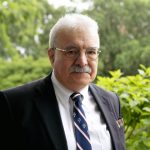
Michael Haykin is Director of The Andrew Fuller Center for Baptist Studies and Professor of Church History and Biblical Spirituality at The Southern Baptist Theological Seminary. Dr. Haykin has taught Church History at different institutions in North America and abroad for over 40 years. He is a member of the Royal Historical Society and Evangelical Theological Society among others. Haykin is married to Alison and they have two children.
Share This