A Dark Landscape with a Clear Path: The Prophetic Word and the Persistence of God’s Purposes in Jeremiah 34-36

Daniel Lott | Aug 24, 2026 | Expositors Exhibit
Introduction
The book of Jeremiah is masterfully crafted literature, as its narratives unfold with increasing theological weight and clarity. At first glance, Jeremiah 35, the account of the Rechabites, can appear disconnected from its surrounding context. Yet its placement between Zedekiah’s covenant failure (Jer 34) and Jehoiakim’s destruction of Jeremiah’s first scroll (Jer 36) suggests a deliberate literary and theological strategy rather than an isolated episode. Why would Jeremiah place the account of a nomadic clan living among Judah between two narratives of royal failure?
By placing the account of the Rechabites between these two royal failures, Jeremiah presents their obedience as a living embodiment of the covenant obedience Judah refused to render. By doing so, he demonstrates that God’s prophetic word continues to accomplish its covenant purposes in multiple ways—not merely by enduring Judah’s rejection, but by displaying the obedience it demands and executing the justice it declares.
Judah’s Kings Reject God’s Word
Jeremiah 34 establishes the first half of the literary contrast by portraying Judah’s rejection of the Lord’s covenant word. Although Zedekiah and the people initially “obey” (שמע) by releasing their Hebrew slaves (34:8–10), they soon “turn” (שוב) and reverse their obedience (34:11–17). These two verbs, שמע and שוב, help create a literary connection between chapters 34-36. In chapter 34 the prevalence of שמע and שוב (cf. “obey” vv. 4, 2x in v. 10, 14, and 17; “turn” vv. 11, 15, and 16) establishes the pattern of Judah’s rebellion: the people hear the covenant word but turn away from it. They do not “incline their ears” to the Lord. Rather than receiving the covenant blessings promised for obedience in Deuteronomy 28, Judah comes under its covenant curses in the same chapter, thus preparing the reader for the dark action of chapter 36 and the obedient contrast of chapter 35.
Chapter 36 brings Judah’s rejection of God’s word center stage.[1] The chapter opens by stating the purpose for reading the scroll with the familiar verbs. In verse 3, the Lord declares, “It may be that the house of Judah will hear (שמע) all the disaster that I intend to do to them, so that every one may turn (שוב, italics mine) from his evil way.” This purpose is repeated almost verbatim in verse 7. This repetition communicates God’s persistent call for Judah to “turn” (שוב) (cf. vv. 3, 7, 28) from its evil ways and “hear” (שמע) (cf. vv. 3, 13, 16, 24, 25, 31) His word. This sets up the dramatic showdown between God’s word, the king, and the temple officials.
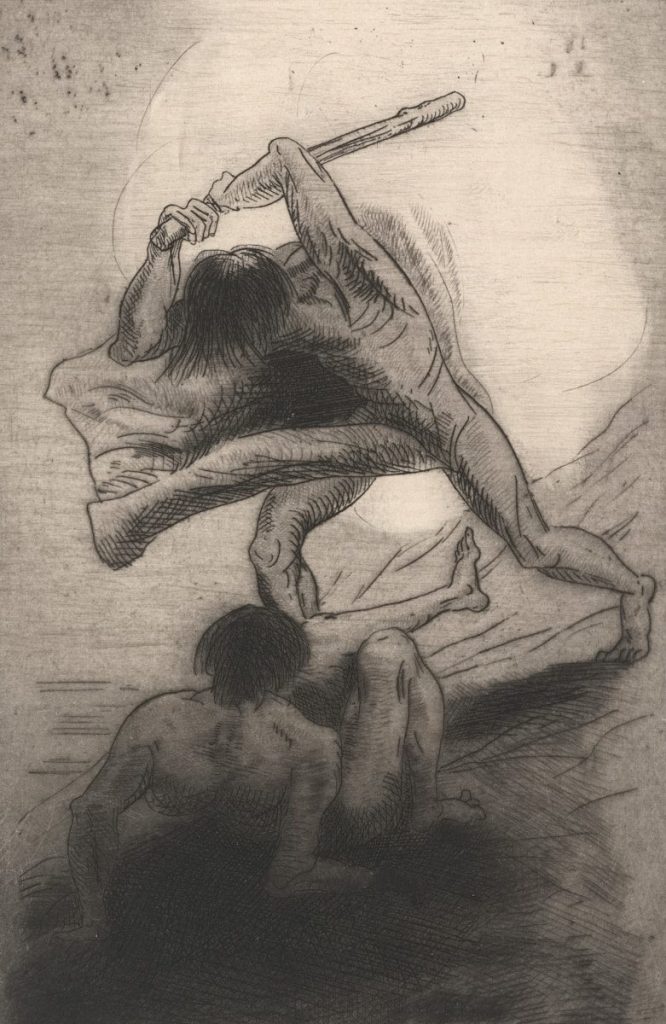
The narrative recalls Josiah’s response to the Book of the Law in 2 Kings 22. There Josiah humbled himself and tore his garments. In Jeremiah 36, however, Jehoiakim and his officials do not tear their garments (36:24). Instead, Jehoiakim responds by cutting the scroll piece by piece and casting it into the fire. Judah’s rejection has intensified. The king not only refuses to obey God’s word but actively destroys it. God’s persistent call to repentance is met with a shocking act of contempt toward the very word that offered the king life.
After the burning of the scroll, Jeremiah is commanded, “Take another (שוב קח) scroll,” renewing the prophetic message after its destruction (Jer 36:28). The replacement of the scroll demonstrates that Judah’s rejection cannot nullify the power of God’s word. Despite the king’s attempt to silence it, God’s revealed purposes continue. The prophetic word accomplishes the purpose for which God sends it. Jehoiakim’s defiance instead brings judgment upon himself: “He shall have none to sit on the throne of David.” Because the king rejected the word that was meant to govern him, that very word now becomes the instrument of his judgment, showing the word’s inescapable power.
Positioned between Judah’s two royal failures, the Rechabite narrative demonstrates that covenant obedience has not disappeared. Chapter 35’s placement highlights the significance of their faithfulness within Jeremiah’s larger presentation of rebellion and obedience. The Rechabites serve as a living witness to the obedience God’s word demands. While Judah rejects the Lord’s commands, the Rechabites provide a faithful response that Judah, as God’s covenant people, should have displayed—to hear, keep, and do His word.
The Rechabites as an Obedient Counterpoint
Jeremiah 35 presents the Rechabites as the obedient counterpoint to Judah. In verses 14 and 16, the Rechabites “kept” and“obeyed” the command of their father, while Judah refused to listen despite the Lord’s repeated sending of the prophets. Verse 15 contains the sharpest rebuke of Judah: “I have sent to you all my servants the prophets, sending them persistently, saying, ‘Turn (italics mine) now every one of you from his evil way, and amend your deeds, and do not go after other gods to serve them, and then you shall dwell in the land that I gave to you and your fathers.’ But you did not incline your ear or listen (שמע) to me.” The Rechabites obeyed the word of their father, while Judah repeatedly refused to turn to the Lord despite His persistent prophetic call. Again, the recurring verbs, שמע (‘hear/obey’) and שוב (‘turn’), function as literary markers that bind chapters 34–36 together, underscoring Judah’s refusal to hear and turn to the Lord. At this point, however, the narrative reaches an interpretive apex as Jeremiah pivots to the Rechabite obedience.
Jeremiah 35:18 states, “Because you have ‘obeyed’ (שמע) the command of Jonadab your father, ‘kept’ (שמר) all his precepts, and ‘done’ (עשה) all that he commanded you…,” the Rechabites are promised blessing. This triad of verbs reflects the vocabulary of covenant obedience found throughout Deuteronomy. Jeremiah could have summarized the Rechabites’ faithfulness with a single statement of obedience, yet he employs the characteristic vocabulary of covenant fidelity. Moses exhorts Israel in multiple places to “hear,” “keep,” and “do” the Lord’s commandments (Deut 6:3; 12:28; 15:5; 26:16–17; 28:1; 30:8–10). Rather than echoing a single passage, Jeremiah seems to be using a broader Deuteronomic idiom. By applying Israel’s covenant vocabulary to the Rechabites, Jeremiah forges a literary connection through contrast. This contrast clarifies the point Jeremiah intends Judah to see: a marginal community within Israel’s world exemplifies the covenant obedience that Judah itself has failed to display. This observation is also strengthened by the fact that Israel was commanded to live this way so that the people might prosper and enjoy prolonged life (cf. 4:40; 5:16; 8:7-10; 11:9-12; 25:15; 30:16). Jonadab likewise concludes his instruction with the promise, “that you may live many days in the land where you sojourn” (35:7). Despite the Rechabites being sojourners without a permanent inheritance, the Rechabites showcase the covenant obedience Israel was commanded to display as the people of the land. The Rechabite obedience exposes Judah’s failure not only to hear God’s word but also to live as the covenant people through whom life in the land was to be sustained.
This connection helps clarify the theological purpose of the narrative. The Rechabites are not Israelites faithfully observing the Mosaic covenant in a formal sense, nor is Jonadab’s instruction presented as a covenant equivalent to Sinai. Instead, Jeremiah describes their response with Israel’s own covenant vocabulary. A family devoted to keeping the words of an earthly father is portrayed with the language Moses used to exhort Israel’s obedience to her heavenly Father. TheRechabites picture the obedience that Israel, God’s covenant people, were called to model. Their faithful obedience is, therefore, met with God’s promise that the house of Jonadab will always have one who stands before Him, a promise deliberately contrasted with Jehoiakim’s loss of a Davidic heir. In other words, the Davidic king forfeits his royal future, while a non-Israelite family receives a perpetual future before the Lord.
The Clear Path
The message of Jeremiah 34–36 also speaks directly to God’s people today. Christians can find hope in the certainty that God’s Word will accomplish exactly what He has promised, despite the surrounding culture’s rejection of it or the disobedience we may find even in our familiar circles. We are therefore called to hear God’s Word with the intent to treasure and keep its instruction, doing exactly what it commands us to do. We do this because we have been given hearts that are made new by God and our final destination is crystal clear. We have the faithful Son, Jesus Christ, and the promise of eternal life. Therefore, we should be eager to remain faithful despite the cost (1 Jn 5:10–12).
The text calls us to examine ourselves in the present moment. Will we hear His Word and remain faithful, regardless of the cost (Matt 5:29) or how unpopular obedience may become (Matt 5:11)? Or will we hear His word only to turn away from God Himself? The dark landscape of Judah’s rebellion is therefore not merely a record of failure but a warning to us and a clear path for God’s people. We should hear His Word, keep it, and do what it commands by the strength He provides.
Conclusion
The prophetic word given through Jeremiah accomplishes the purposes for which God sent it. Zedekiah’s obedience proved temporary, and Jehoiakim openly rejected the Lord’s word, yet the Rechabites remained steadfast in keeping the command of their father. Read together, these chapters present two complementary truths: God’s word endures despite human opposition, and God’s purposes continue despite Judah’s covenant failure. Judah’s rebellion neither silences God’s revelation nor eliminates the obedience His word calls forth. Accordingly, the promise given to the house of Jonadab functions as a clear path within the dark landscape of Judah’s covenant failure. Just as Jehoiakim was told that he would lack a man to sit upon David’s throne because of his covenant unfaithfulness, so the house of Jonadab is promised that it will never lack a man to stand before the Lord. The Rechabites’ faithfulness serves as a testimony that God’s Word does what it says it will do, even when Judah refuses to obey it.
The dark landscape of Judah’s covenant failure presented in Jeremiah is not without hope. Despite Judah’s rebellion, the Rechabites provide the clear path, displaying the obedience God’s word has always called for. In this way, they are pointing beyond themselves to the faithful Son who perfectly heard, kept, and did His Father’s will, accomplishing the covenant obedience Israel failed to render.
Footnotes
[1] Andrew G. Shead, A Mouth Full of Fire—The Word of God in the words of Jeremiah, NSBT (Apollos/InterVarsity Press, 2012), 101. This book’s insight of God’s word in Jeremiah helped me understand the literary escalation happening. He references how both Jeremiah and Baruch are removed from the scene as only Elihud is left reading the scroll to the king leaving no other personal reason for the scroll’s rejection.

Daniel holds a Master of Divinity in Biblical Languages and Theology from The Southern Baptist Theological Seminary and a Bachelor of Arts from the University of Mobile. He and his wife have four boys and are actively involved at Kenwood Baptist Church, where he teaches and serves in various ministry capacities. This particular paper was birthed out of a Sunday School class teaching through the book of Jeremiah in August 2024.
Share This